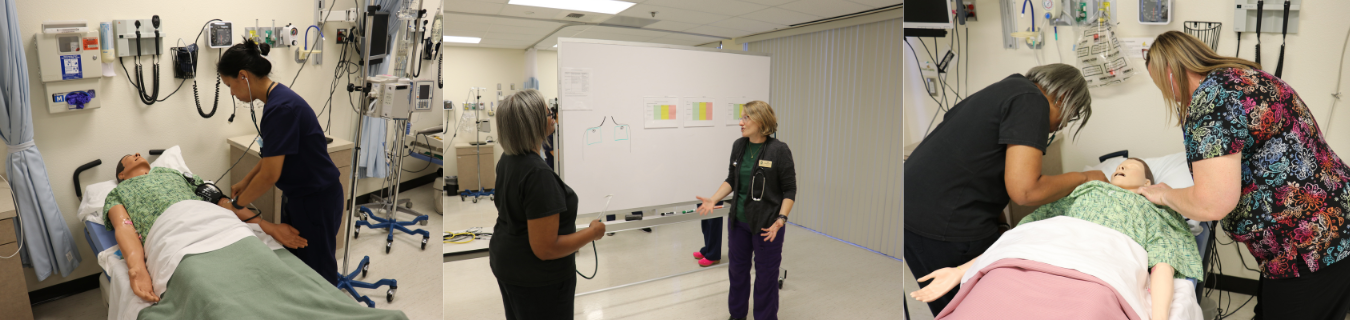
More than 75 nurses from across Sacramento County came together last week at Sacramento State's Nursing Simulation Laboratory to strengthen the clinical skills needed when responding to disasters and public health emergencies.
The training is part of the behind-the-scenes work that helps keep Sacramento County prepared. Long before an emergency happens, the County and community partners train together so all nurses are ready to care for residents when normal health care services may be disrupted or community needs suddenly increase.
"Working with our local health care and academic partners helps us prepare our nurses to meet the needs of our community when it matters most," said Dr. Phuong Luu, Sacramento County Public Health Officer. "The more we practice before an emergency, the more prepared we are to respond with confidence from a nursing lens.”
Every two years, the County and Sacramento State join forces to offer the training as part of the County's Nurse Disaster Worker Training Plan. The program gives nurses the opportunity to practice technical skills in a simulated patient environment before they are needed in an actual emergency.
“The partnership between Sacramento County and Sacramento State’s School of Nursing is long-standing and important to the health and resilience of our shared communities,” said Lynnan Svensson, Sacramento County’s Director of Nursing for the Department of Health Services.
Attendees and instructors included licensed nurses from Sacramento County's Department of Child, Family and Adult Services and Department of Health Services, along with staff and volunteers from Sutter Health and Sacramento State's School of Nursing.
Bringing together the County, private health industries and higher education gives nurses the opportunity to learn from one another and strengthens the network the County can rely on during an emergency. That collaboration builds a workforce prepared to care for the community, whether responding to an everyday public health need or a large-scale disaster.
For residents, much of that preparation happens out of sight, but when an emergency arises, it’s the behind-the-scenes training, the strong community partnerships and all the skills built beforehand that better position the County and partners for a unified and effective response.
This is public health in action, investing in the people and preparation that ultimately protects the health of the entire community.