You're a landlord, you need reliable renters. You fear expensive unit damage, late rent payments and turnover, leaving your unit empty and your pocket penniless. You hear about a government back master lease program that guarantees you timely rent, tenant relations and fixes any damage to the unit. Uniquely, this program shelters people experiencing homelessness—people you see every day while driving around the streets of Sacramento—people who are shunned, stereotyped and tragically-completely misunderstood.
You ask around the pool of other local landlords - has anyone joined this unique master lease program? You find a few landlords with units in the Sacramento County Scattered-Site Shelter program. This program is funded through the county, but operated by the non-profit City Net. City Net has a proven track record of successful street outreach, case management and shelter operations up and down California. The more research you do, the more intrigued you are that this program may be the solution you've been looking for. However, you cannot find this shelter model anywhere else in California or the country.
___________
That’s because it's, so far, a progressive and unique model Sacramento County started in 2017. The idea of master leasing single family homes was a solution to the lack of funding and space to build new shelters for people experiencing homelessness.
The scattered site model also allowed homeless outreach workers to provide options they never had before, including:
- The ability to move several people from a single encampment into a shared space
- An interim housing solution that allows pets, partners and possessions to all shelter in one location
- A step between living on the street and moving into permanent housing.
In 2017 the county didn't have tiny homes to offer as shelter. There were only congregate shelters, all of which were full, and few that were a desirable option for couples or people with adult family members or pets.
A funny thing happened when the county started diversifying shelter notions in ways that accommodated different sets of needs. People started saying “yes" to help. The more people said “yes" to options that met their needs, the more diverse the County's response to homelessness evolved.
The Scattered Site shelter program has seen adversity throughout the years. The previous operator, Sacramento Self Help Housing (SSHH), went bankrupt after a tumultuous year of money issues - including unpaid rent to landlords enrolled in the scattered site program. While the County rapidly hired a replacement operator, it broke yet another box – direct payment of rent to landlords.
Brothers Karam and Roni have had two homes in the scattered site program since 2022. When SSHH stopped paying rent, they went five months without payment. Five months without income to pay their mortgages. With direct promises from the County for back payment and a more seamless operator coming on board, the brothers stayed in the program. Now, several years later, they're happy they did.
"Yes, we're happy to get rent on time every month. But we also like helping people that feel like they're on the bottom and just need help getting up." said Karam.
The brothers also have one home in the traditional rental market. Roni speculates, “We're fortunate to have a great renter in that house that has been there a long time. Otherwise, we'd consider moving that house over a well."
_________
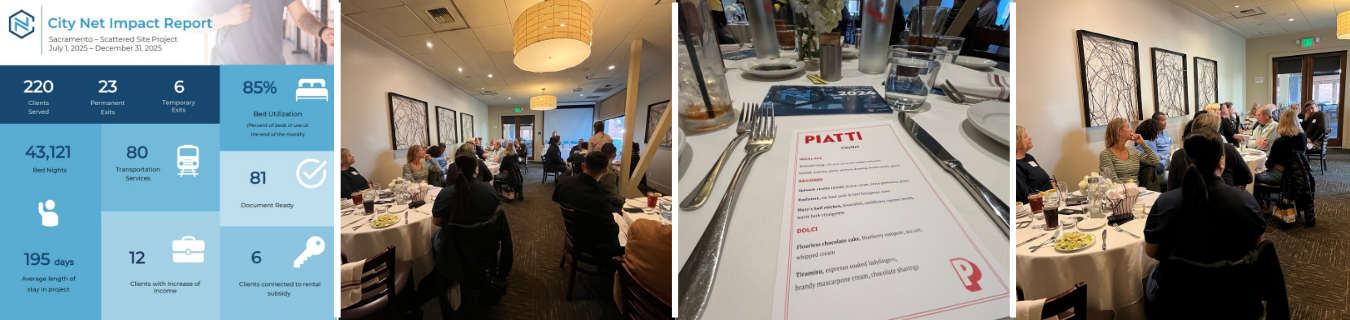
A dozen landlords sit together at an appreciation event held by City Net; many of these landlords have been with the program for years, a few are recent recruits by fellow landlords. They intently listen to the purpose and mission of the program and of City Net as an organization. Several raise hands and ask about outcomes and services offered to participants.
The Scattered Site program has a 38% positive exit rate to permanent housing - higher than any other sheltering program the County funds.
But City Net shares the successes of the program that are more than just outcomes:
- Participants learn to live with roommates. In the most successful cases, these matches can move into permanent housing together when ready.
- Everyone in the household, including the City Net employee placed as a house monitor, is responsible for shopping, cooking and cleaning.
- Living in a house, in a neighborhood gives everyone the chance to integrate back into traditional society and learn to be a responsible roommate and a good neighbor.
When asked, several landlords said they like the program because it’s a real solution to addressing homelessness and dependable income for them. A win-win.
Interested in learning how you can place your available house into the scattered Site program? Contact Laura Wolff at laura.wolff@citynet.org or 916-995-3867.