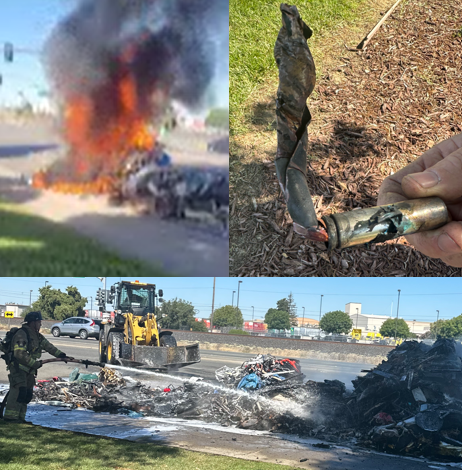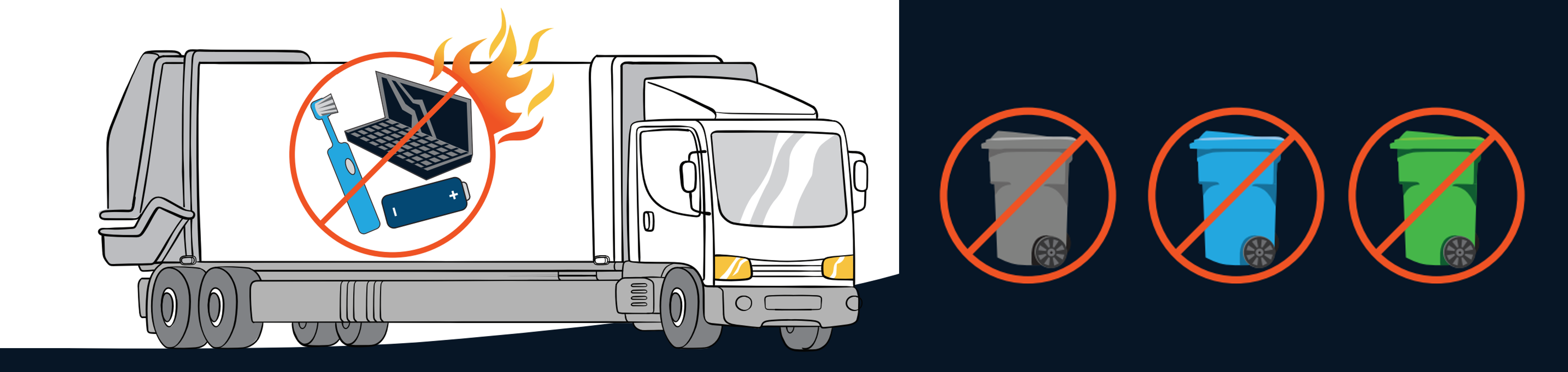
Batteries are not accepted in the residential curbside collection program – here’s why! Fires sparked by improperly discarded batteries and battery-embedded products are becoming an increasingly common and costly problem.
When any battery or battery-embedded product is tossed in curbside collection carts or bulky waste piles, the material is compacted together. This process is essential for efficient collection service, but when batteries are crushed, punctured or exposed to metal or liquid during compaction, they can spark, explode or ignite. Lithium-ion batteries are especially volatile, but all rechargeable batteries contain flammable and toxic materials that can create a hazardous situation.
Battery-related fires on collection routes put collection employees in immediate danger and can threaten nearby homes, businesses and roadways. Expensive collection trucks can be severely damaged or destroyed. Entire collection routes may be delayed or suspended while emergency crews respond.
The fire risk doesn’t end at the curb, either. Once a battery is at a disposal or recovery facility such as Kiefer Landfill and the North Area Recovery Station, large machinery continues the compaction process. Here too, crushed batteries can ignite and damage infrastructure, disrupt operations, harm the environment and put our staff and the public at risk. These preventable emergencies waste time, money, resources, and most importantly, create unnecessary danger.
Complicating the issue further, many people don’t realize how often batteries show up in everyday items that require proper disposal. They are inside toys, tools, greeting cards, vapes, small electronics, all rechargeable products and other everyday household devices. Even small coin-sized batteries can trigger dangerous fires when crushed.
The good news is you can stop battery fires right at home! The safe way to get rid of old batteries and non-functioning battery-embedded products is free, easy and only takes a few steps – Tape, Tub, Take:
Tape – Check for leaks or corrosion. Tape over the positive (+) and negative (–) ends with only clear tape for all rechargeable batteries, lithium coin/button batteries, and 9-volt and higher volt batteries.
Tub – Collect and store used batteries in a hard plastic tub or sturdy box at home.
Take – For drop-off recycling, take batteries to a local Household Hazardous Waste (HHW) drop-off facility or find a nearby battery recycling location by searching the Earth911.com website. For products embedded with permanent batteries, drop them off for free e-waste recycling at Kiefer Landfill, North Area Recovery Station or another e-waste recycling site.
One improperly discarded battery can ignite a truck, shut down services or put lives at risk. But your informed choice to drop off batteries instead of tossing them can prevent fires. Please share this message with friends, family, and neighbors. The more people who know, the safer we all are. Bottom line – batteries don’t belong at the curb. Instead drop them off for proper recycling, and help protect our workers, our neighborhoods and our environment.
Learn more about proper battery recycling at SacGreenTeam.com.